Indian Grass
Sorghastrum nutans
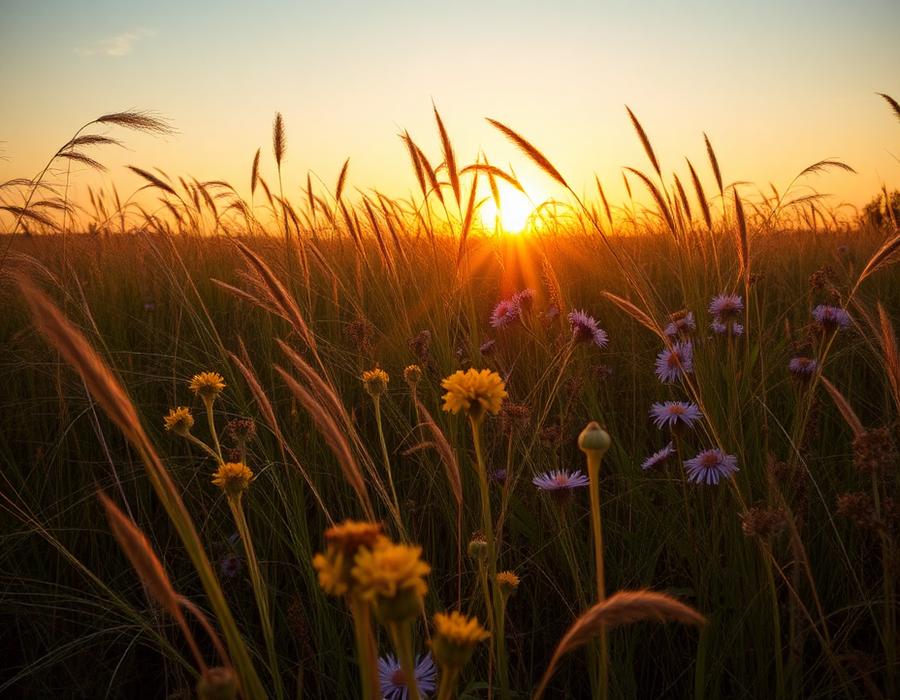
Golden summer plumes shift to amber, orange, and copper by fall on a keystone prairie grass. Roots run six feet deep, so drought barely registers.
Typically 1 pint–1 gal · $9–$30 · final price at pickup
- Thu, Oct 158 AM – 4 PM
- Fri, Oct 168 AM – 4 PM
- Sat, Oct 178 AM – 2 PM
One of the great American prairie grasses. the fall color, the height, the winter interest, and the wildlife value are all exceptional.
Indian Grass is the tallgrass prairie at its most golden. In summer the yellow-orange flower panicles emerge above blue-green foliage, and by fall the entire plant has shifted to warm shades of amber, orange, and copper that glow in low light and persist beautifully into winter. Few plants deliver this combination of height, movement, and seasonal color in a single organism. It's a keystone prairie species, the kind of grass that anchors meadow plantings ecologically and aesthetically. Deep roots (often 6–8 feet down) make it extraordinarily drought-tolerant and excellent for erosion control on slopes and banks. Native bees use the dense clumps for nesting, and the seeds are a critical winter food source for songbirds. Plant it in bold masses for the full meadow effect, or use it as a dramatic specimen anchor at the back of a sunny border. It pairs beautifully with Purple Coneflower, Black-eyed Susan, and other prairie forbs. Cut it back to 4 inches in late winter. That's the entire maintenance requirement.
A nursery-grown plant, ready for the ground.
Healthy, container-grown indian grass propagated on-site at Hill House from regional genetics. Includes a one-page care card. We make every effort to supply plants as listed; occasionally we substitute a similar species of equal value.
Plant indian grass instead of Miscanthus (Miscanthus sinensis), Pampas grass (Cortaderia selloana). Same job in the garden, without the spread.
- Sun
- Full sun
- Water
- Dry
- Mature size
- 3–6 ft · 18–30 in wide
- Bloom color
- Yellow, Orange
- USDA zones
- 4–9
- Family
- Poaceae
- Native range
- Eastern and central North America prairies, from Canada south to Mexico and coast to coast
Care notes for indian grass.
Plant in full sun in dry to average, well-drained soil. Extremely drought-tolerant once established. do not overwater. Cut back to 4 inches in late winter. Self-seeds in favorable conditions; divide clumps every 3–5 years to maintain vigor. No fertilizer needed; rich soil promotes floppy growth.
Pairs well with these.
Same light, same soil, same wildlife. Janet's picks to plant alongside indian grass.
Or skip the guesswork.
Curated packages bundle complementary species for an instant habitat. One reservation, one pickup day, a printed layout map.
Skyline Drive Package
This package celebrates the world renowned “Skyline Drive” by featuring native plant species encountered along the Skyline Drive in Shenandoah National Park.
Piedmont Rain Garden Package
For homeowners with a yard that floods when it rains, this package is your solution! The Piedmont Swale Garden Package is comprised of flood tolerant species that will thrive in wet soils.
Exceptional Patio Garden Package
The Exceptional Patio Garden Package is a low maintenance, fool proof way to guarantee an endless color show for you and your guests to enjoy all patio season long.